Lunar TOWER Vertical Infrastructure Supporting Lunar Habitation
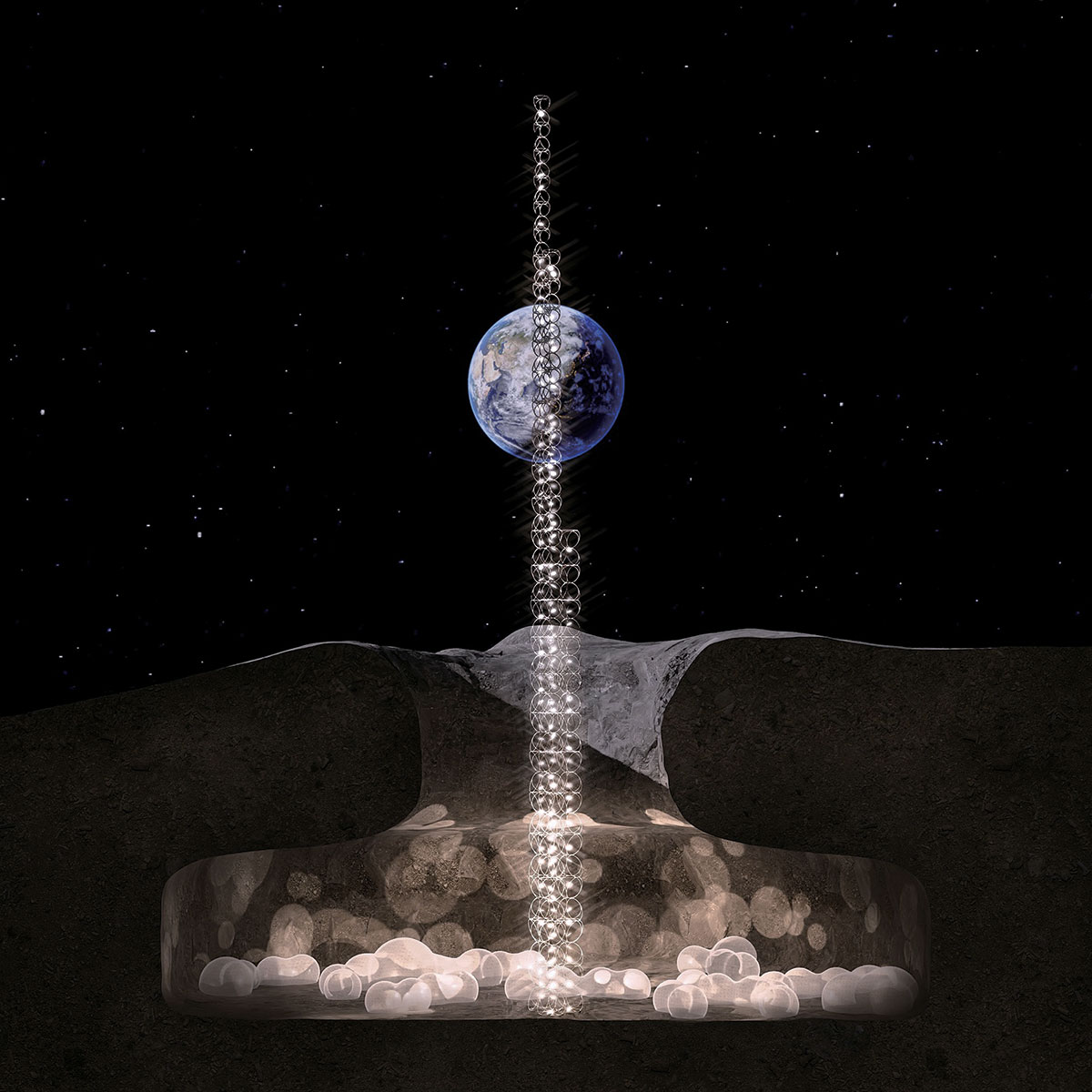
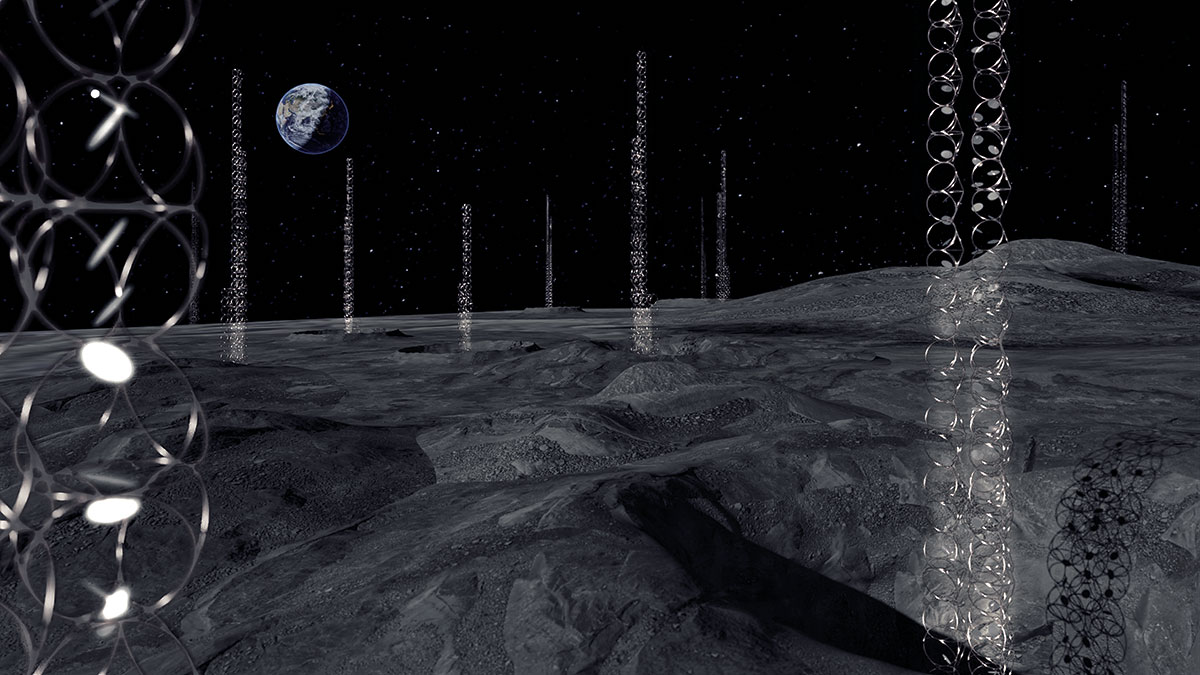
Polar regions and pits, which are highly promising candidate sites for lunar habitation, are isolated by rugged terrain and steep drops, making direct access extremely difficult. Many barriers exist to safe human life on the Moon, such as communication disruptions caused by the terrain, an unstable energy supply, and hazardous means of transportation. To overcome these challenges, vertical structures are required. Lunar TOWER is a 150-meter-tall multifunctional tower designed for construction on the lunar surface.
The Lunar Mother Tree
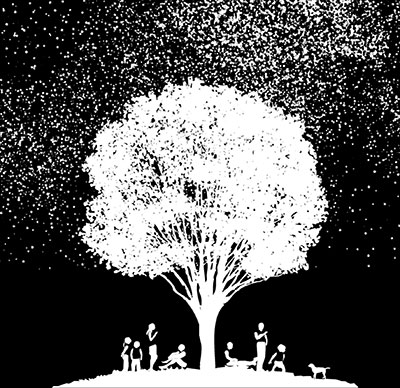
On Earth, mother trees that have survived for generations extend mycorrhizal networks through their root systems, helping to sustain the forest. They transfer carbon to trees connected to the network, support the growth of young trees that receive insufficient nutrients in the shade, and sometimes help them gain access to light. A forest is not merely a collection of trees, but a complex system of hubs and networks.
On the Moon, there are no trees, water, or air, only a harsh and unforgiving natural environment. As a first step toward achieving a high level of Space QOL, we envision cultivating The Lunar Mother Tree. Rising in the barren lunar polar regions or within lunar pits, it will serve as a hub for a wider network. It will create a gathering place reminiscent of a sun-dappled grove, supporting quality of life and strengthening community resilience. Eventually, it will develop into The Lunar Forest and The Lunarscape, becoming a symbol that reflects the culture and society of the Moon.
Structure of Lunar TOWER
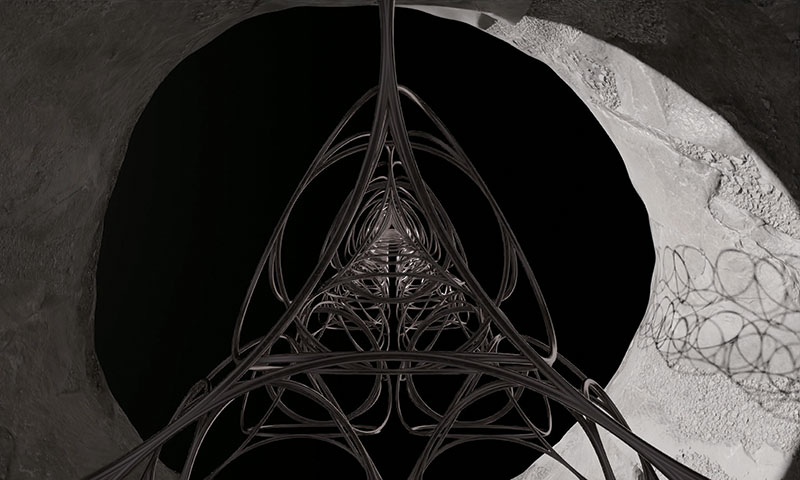
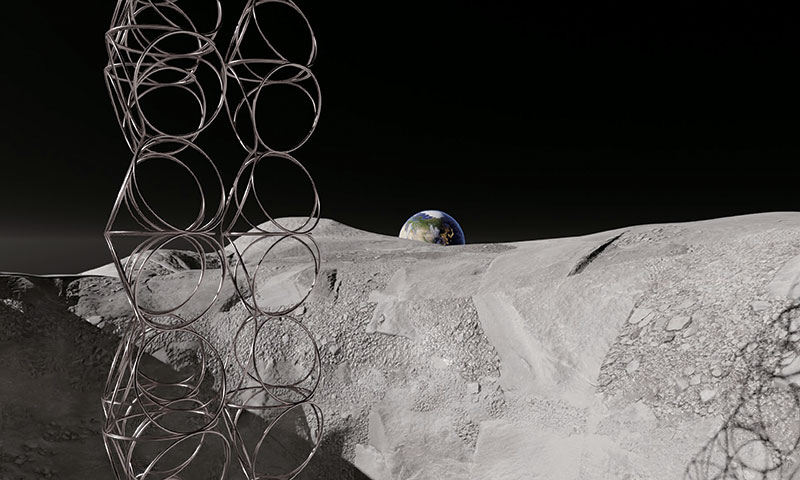
Using lightweight, high-strength CFRP ring frames as primary elements, the structure is built by stacking tetrahedral space-truss units and can reach a maximum height of 150 meters. To maximize transport efficiency from Earth, all components are concentrically nested and packed within the payload fairing of a medium-class rocket. A single launch can transport all components necessary for the 150-meter tower, and construction is completed on the lunar surface by adapting tower-crane assembly techniques. This standardized coupling system enables autonomous robotic assembly, allowing for height adjustments as needed and disassembly and reuse at the end of the tower’s service life.
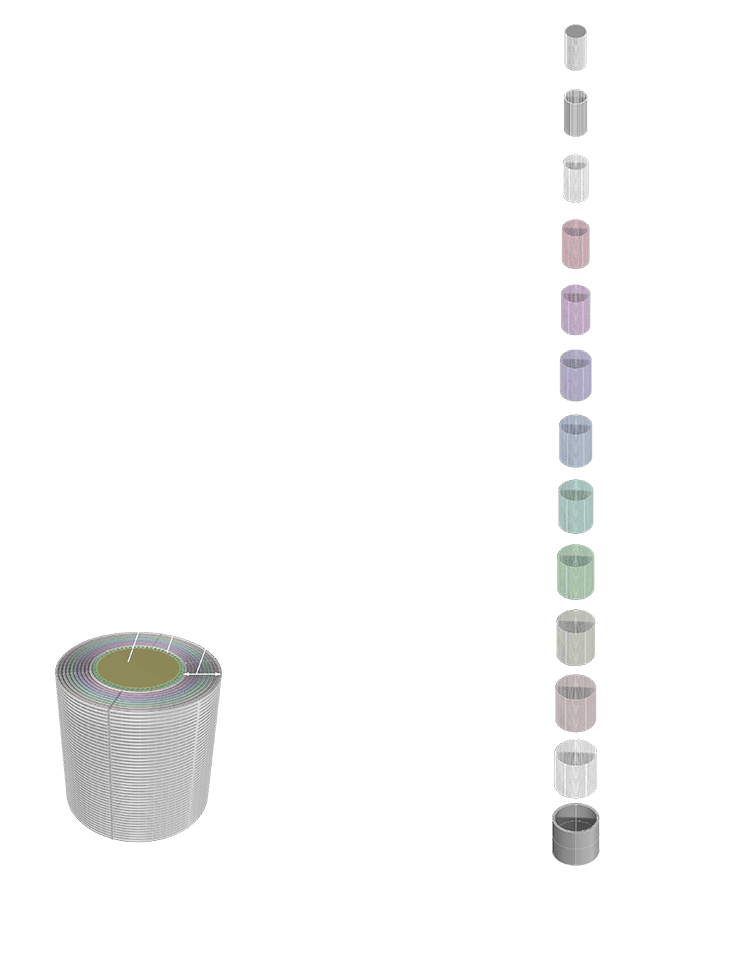
To make maximum use of the payload volume of a medium-class rocket (4 m in diameter × 4 m in height), circular frames, disc-shaped mirrors, and connecting rods are used as primary elements to enable highly efficient packing.
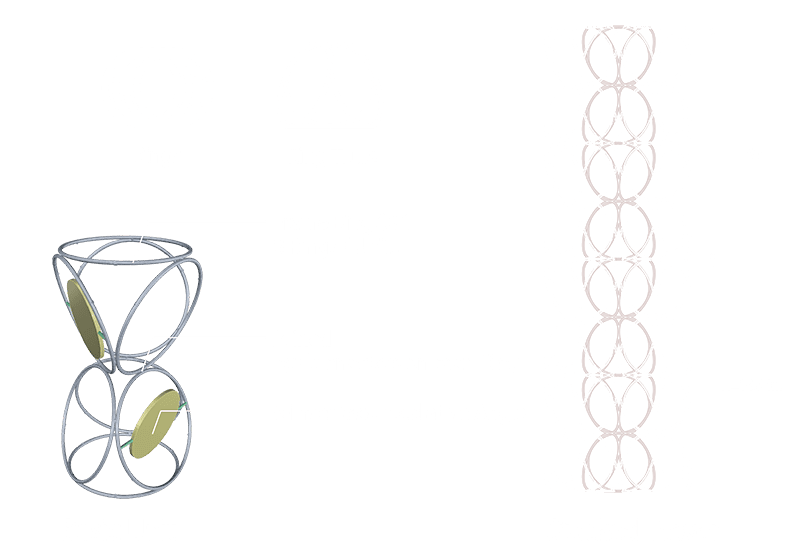
Units are stacked starting with ring modules of the same size. Modules of adjacent sizes are joined vertically to form a three-column tower system.
Depending on the terrain, units at the top of the tower can be omitted to adjust the weight distribution and maintain the overall stability of the structure. By adapting climbing techniques used for tower cranes, two towers autonomously and progressively climb and assemble the space-truss structure. This transforms simple components into a complex system, enabling fully unmanned construction through automated control systems and algorithms.
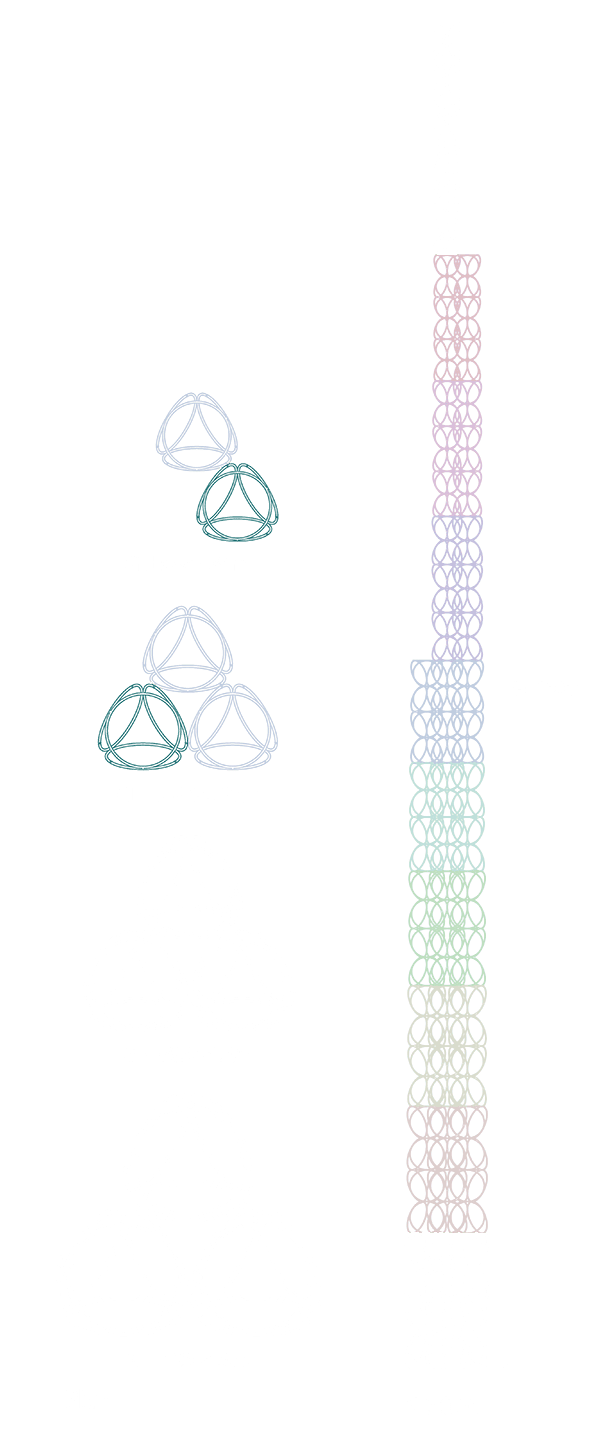
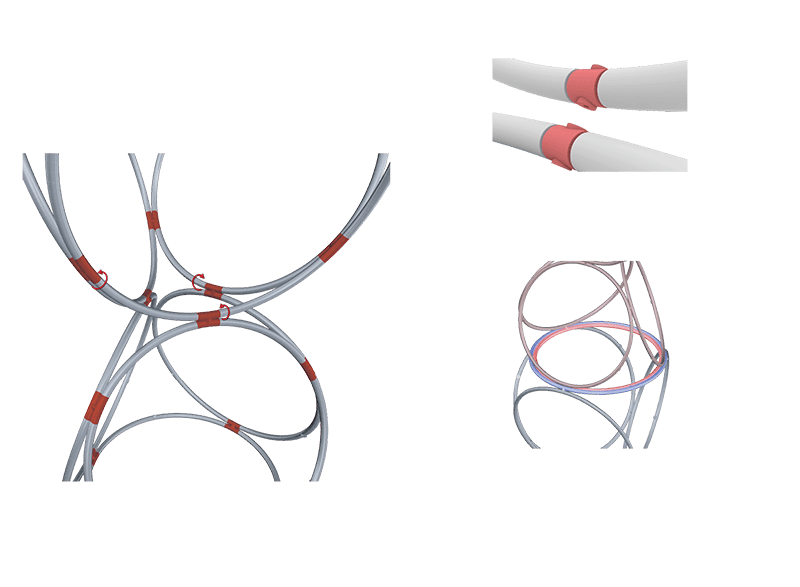
Joints that rotate about their axes are provided at six split locations on each ring, allowing adjacent rings to be securely connected by structural connectors.
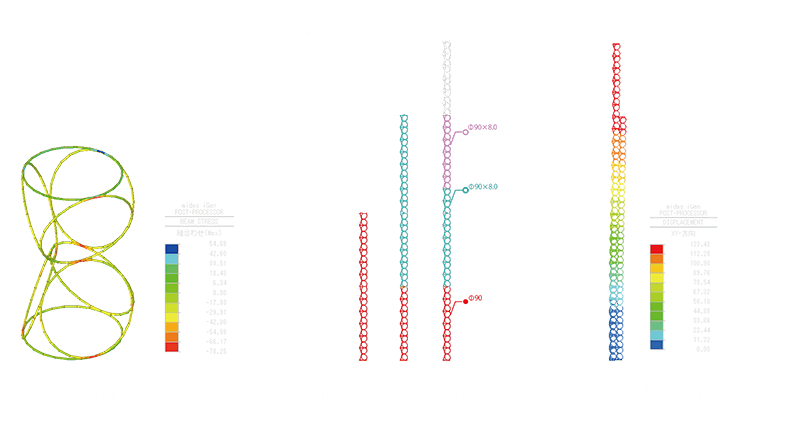
The material is ultra-high-stiffness CFRP with excellent specific strength and specific modulus. By adjusting the ring plate thickness at each level, vertical stiffness is balanced, minimizing differences in vertical deformation caused by variations in the number of stacked units and thereby distributing the dead load uniformly across the lunar surface.
Functions of Lunar TOWER
It provides five primary functions: safe vertical mobility into lunar pits, stable wide-area communication through the transmission of signals from high elevations across rugged terrain, sustainable energy supply via solar power, safe navigation beacons on a moon without roads or control towers, and the introduction of natural light into habitat modules. These functions collectively enhance the safety, functionality, and comfort of lunar architecture.
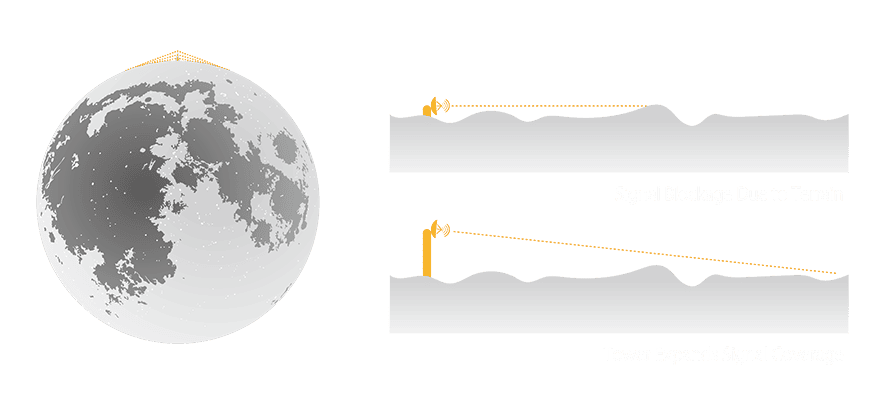
Both polar regions and pits have uneven terrain, making direct access by landers or rovers extremely difficult. Topographical shading and elevation differences also hinder the stable supply of communications services and power. Thus, vertically deployable structures are utilized as essential infrastructure to enhance the safety, functionality, and comfort of lunar architecture.
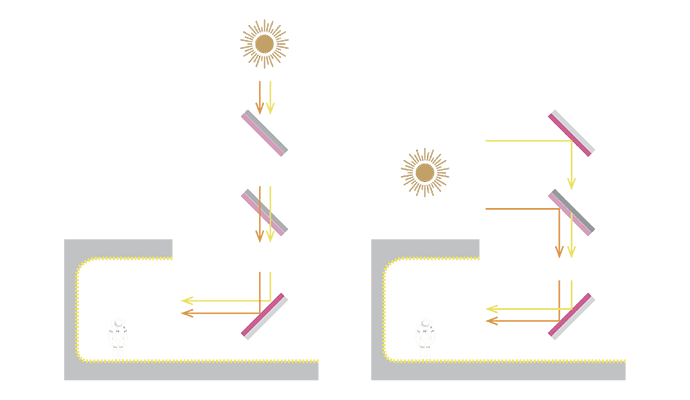
On the Moon, daylight lasts for 14 continuous Earth days. Installing curved mirrors and communication antennas for lunar orbiters allows the system to overcome shadows cast by ridges or polar terrain, expanding daylight-collection and communication windows to support the stable transport of personnel and materials and the stable supply of energy to habitation zones.