Nichia Corporation
Suwa Technology Center
Floating in Nature
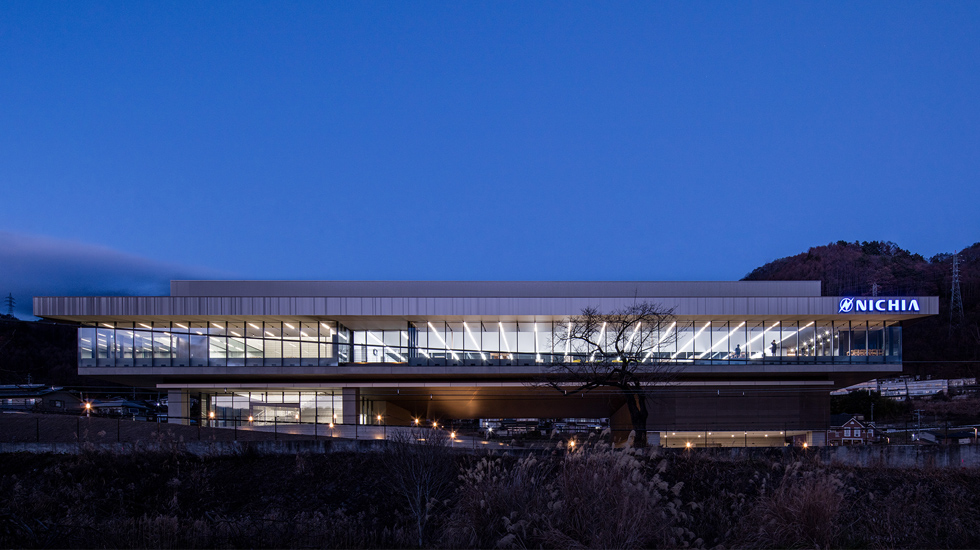
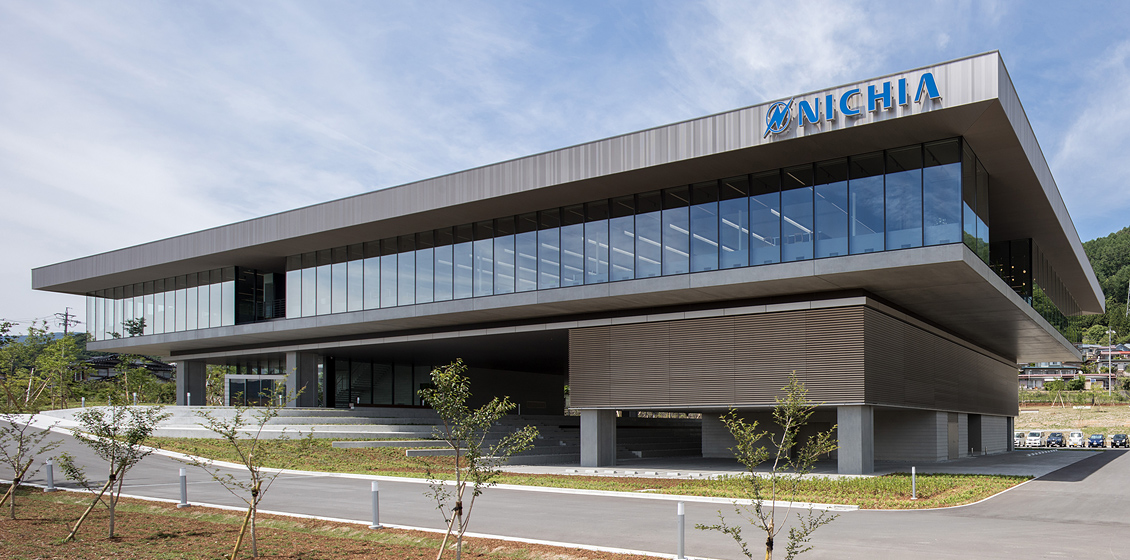
The Nichia Corporation Suwa Technology Center was completed in November 2016, on a site that overlooks the rich natural surroundings of Suwa Lake in Nagano prefecture. It was built to promote innovation and inspire research.
The Client Wanted to Promote Innovation
Nichia Corporation has the world’s top market share of LEDs. The Suwa Technology Center was designed as a development base for advanced products such as LEDs and laser diodes, as part of the company’s 60th anniversary project. In creating a research environment that would promote innovation, we chose a location rich in nature at the foot of the Yatsugatake Mountains, overlooking Suwa Lake.
Choosing the right site came first. The client was able to select from among several candidate sites in the Suwa region of Nagano Prefecture, which is home to many companies working in the optical and precision instrument industries. By cooperating with these companies, the client could also boost innovation.
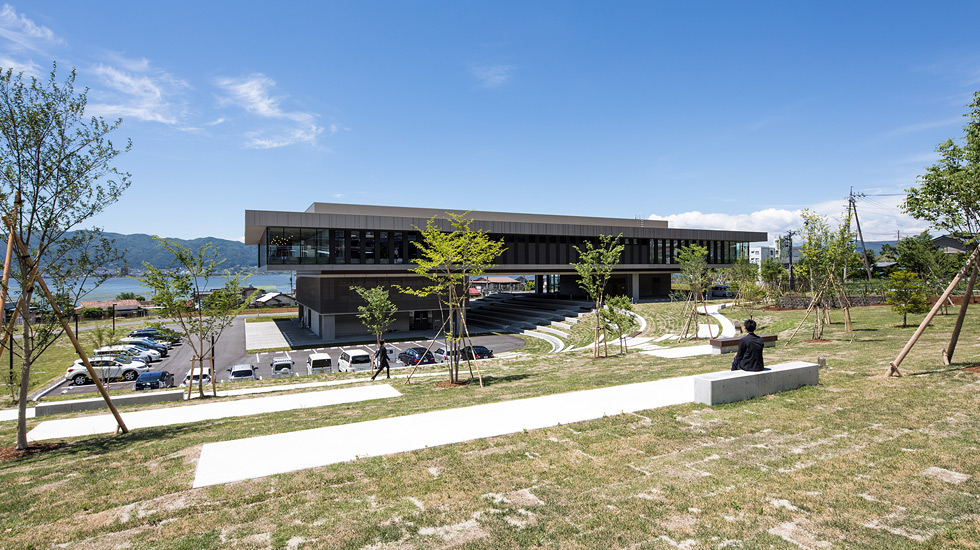
A research laboratory amidst nature
Space Offering Seamless Connection
In organizing space and optimizing movement within the facility, we consolidated research and development on the second floor, which also offers a good view of Suwa Lake wherever you are situated.
Multipurpose common use areas, office and laboratories are all at different heights relative to the lake. Depending on the distance from Suwa Lake. Depending on the distance from Suwa Lake, adjusted natural lighting to match eye level and interior lighting. The idea was the lake side was open and relaxing. While the spaces within the facility on the mountain side encouraged concentration.
Each area was connected without a corridor, to encourage freedom of movement, so people could circulate without disturbing others’ concentration. This supports creativity.
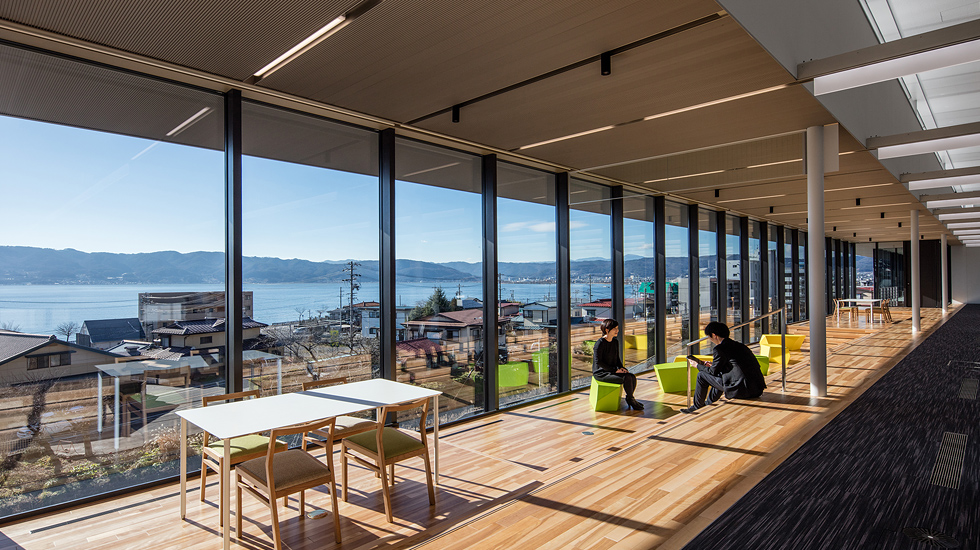
An open ”Common Space” overlooking Suwa Lake
Design and Construction Using Precast and Pre-stressed Concrete
To create a “floating” architectural design, we used pre-stressed pre-cast concrete for the second floor beams and pilotis. Piloti space spanning 30 meters provides space for an evacuation center in the event of a disaster.
We also dealt with problems unique to cold areas. Here, the average temperature in January is minus 1.3 degrees Celsius. When it is cold, it takes more time for concrete to cure for maximum strength, and construction may fall behind schedule. As a result, we adopted the precast construction method, where we construct columns and beams in the factory and assemble them on site. To do this, we had to decide on specifications and make orders early. Using the design-build method we could do this since it optimizes preconstruction coordination between the various people in charge of design, construction and supply.
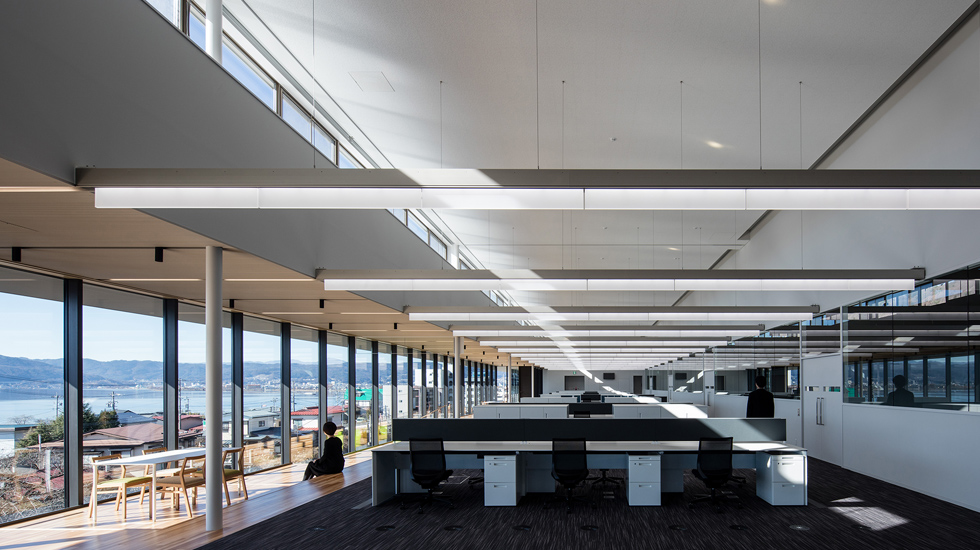
Office space seamlessly connecting to “Common Space” and the Laboratory
People in Charge
Toshihiro Okitsu
Design Department, Osaka Branch
In order to design the project, I walked along the banks of Lake Suwa. It felt good. The lake was calm without waves. I wanted to connect the building with nature—the lake shore, the trees and greenery and the mountains in the distance. I wanted to create a space where you felt you were right there on the edge of the lake. That was the desire that informed my design.
Usually, the site would have been already decided before I started design, but in this case, we were able to participate right from the time the site was being selected. I was therefore able to integrate the Suwa Lake environment and the mountainside behind into the design. We also took into account natural plants so that the landscape and the natural environment are integrated in a way that both researchers and local residents can enjoy.
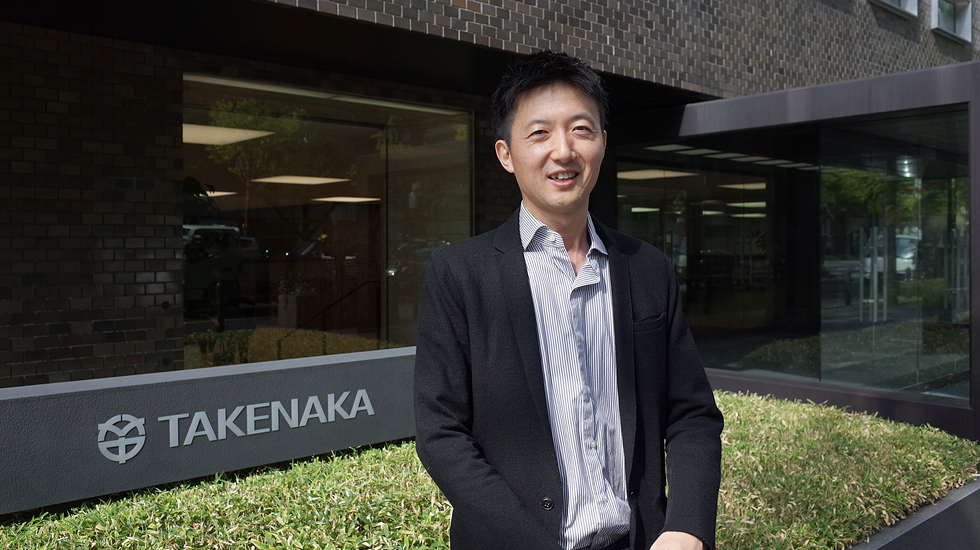
Toshihiro Okitsu
Design Department, Osaka Branch
Hisaki Kaneniwa
Nagano and Yamanashi Area Facility Management Center
I remember just like yesterday how we used a jet heater to warm the concrete of the foundation so it would not freeze.
We used non-standard construction methods, including a hybrid structure with precast elements, pre-stress beams and steel frames. Combining different materials was difficult but we did our best to meet the schedule.
Takenaka has a lot of organizational capability—along with the passion to realize better architecture—using various technologies.
There were a lot of people involved in this project, from different places. The client was in Tokushima, the design team was in Osaka, the construction team was in Nagano, and the construction backup was from Tokyo. We used all sorts of IT tools to communicate with each other and build effective consensus.
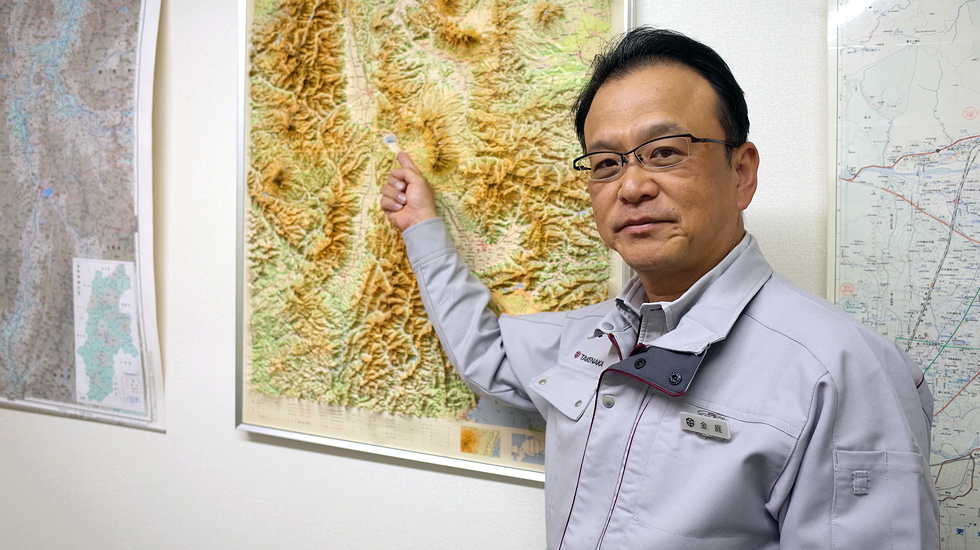
Hisaki Kaneniwa
Nagano and Yamanashi Area Facility Management Center